Model
Development
Small Models, Outsized Intelligence
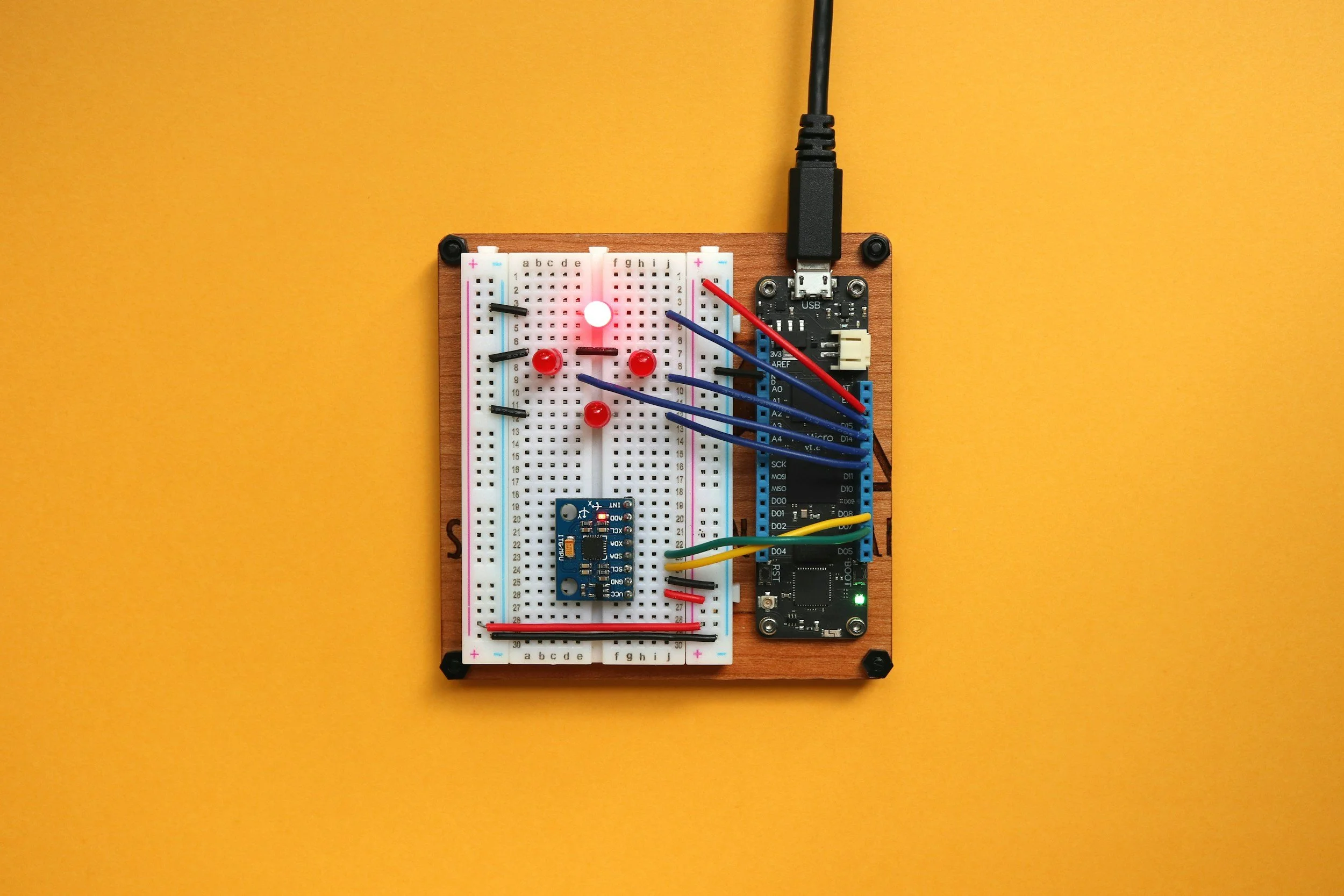
DEMOS AI LAB builds original models — designed and trained from the ground up for the problems that demand edge AI. Our default is to build, not borrow — adapting an existing foundation only when the problem or the customer demands it. Every model begins with the problem: the hardware it must run on, the signals it must understand, the decision it must support, and the conditions it must survive.
This discipline is what makes small models capable of outsized intelligence. A model built for one job — trained on ground truth from the physical world, evaluated against expert-vetted benchmarks before it ever reaches the field — outperforms a general-purpose giant at that job, at a fraction of the size, running entirely on-device. Nothing sent to the cloud. Nothing left to guesswork.
Model Architectures
-
Purpose-built architectures. We design model architectures around the data they will live on — continuous signals, physical measurements, real-world streams — and the hardware they will live in: resource-constrained, low-power, often disconnected. Efficiency is not an optimization pass at the end; it is the starting constraint.
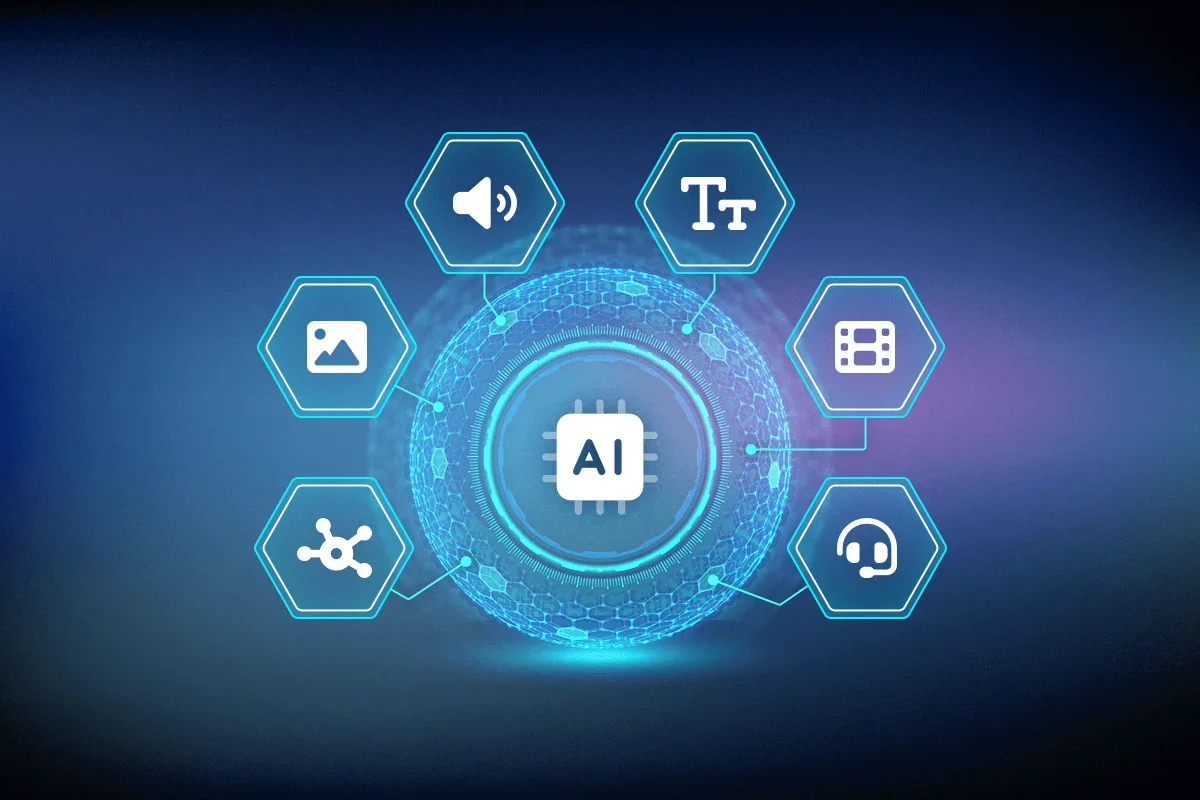
Multimodal by necessity. The physical world does not fail through a single data stream. Electrical signals reveal what imagery cannot; sound detects what telemetry misses. Where a problem demands it, we build families of small models — each mastering its own modality, fused on-device into a single prediction — because the complete picture only exists when every signal is heard.
Trained on ground truth. Our models learn from proprietary, expert-vetted datasets where every label is confirmed by real-world outcomes — the work of our Data Engine. Better data is how a small model earns its intelligence.
Evaluated before deployed. Every model ships with rigorous test and evaluation against SME-vetted benchmarks. We measure what a model knows, where it fails, and how confident it should be — before it reaches the field.
Built to Be Verified
-
Every model we build is engineered to know what it does not know. Calibrated confidence, stated uncertainty, and rigorous test and evaluation against SME-vetted benchmarks are not features — they are requirements, because our models operate where being wrong has consequences. Our model development is grounded in research: conducted alongside leading university laboratories, pursued through federal research programs, and built to be published. Openness about how our models work, and honesty about what they know, is the product.
Our first platform in development, Grid Sentinel, is this discipline applied to the electrical grid — the first of many.
Secure by Architecture

-
Security is not a layer we add to our models — it is the shape of the system itself. Our models run entirely on-device: no cloud dependency, no data in transit, no external connection required to operate. What never leaves the device can never be intercepted or exfiltrated.
For government and defense missions, this architecture operates fully air-gapped — in disconnected, contested, and bandwidth-denied environments where cloud-based AI cannot function and should not be trusted. For commercial and consumer deployments, the same design becomes a privacy guarantee: inference happens where the data is born, and it stays there.
Small models make this possible. A model compact enough to live on commodity hardware needs no data center behind it — and a system with no backhaul has no backhaul to defend.
Intelligence for the Physical World

-
The last decade of AI learned from the internet — text, images, code. Physical AI learns from reality: the hum of a transformer, the vibration of a bearing, the waveform of a fault forming inside a line. It is machine learning applied to the signals the physical world actually produces — and it is what DEMOS AI LAB was built for.
This is harder than it sounds. The physical world's data cannot be scraped; it must be captured, instrumented, and confirmed against real outcomes. Its signals are noisy, continuous, and unforgiving of error. And its intelligence must live where the signals are — on the device, at the edge, in the field — because the physical world does not wait for a round trip to the cloud.
Our models sense, predict, and act on physical systems: machines, infrastructure, environments. Not chatbots that describe the world — models that understand what it is doing, and what it is about to do.