Models
Tools
Grid Sentinel: Inside the Multimodal Architecture
This page describes and documents the complete technical architecture of Grid Sentinel — the models that see, hear, and read the electrical grid, and the tools that train, optimize, deploy, and harden them for real-world field conditions.
Every component is purpose-built for the electrical grid. Nothing here was adapted from a general-purpose AI system. Each model targets a specific data stream. Each tool serves a specific stage of the engineering lifecycle. Together they form the only edge AI architecture built exclusively to predict, prevent, and eliminate power outages before they occur.
Multimodal Architecture

-
Grid Sentinel is multimodal because the grid's failure signatures are multimodal — no single data stream can predict a power outage alone. Electrical signals reveal voltage anomalies but cannot see the vegetation encroachment causing them. Satellite imagery identifies physical infrastructure risk but cannot measure the electrical precursors developing inside the line. Acoustic data detects mechanical fault signatures but cannot cross-reference them against the maintenance history that explains why. Five distinct models — Edge Signal & Sensor, Edge Vision, Edge Audio, Edge Physical, and Edge Language — each purpose-built for its own data stream, fused into a single unified on-device prediction engine, running simultaneously, correlating every output, and delivering the complete picture of the grid in the local language of every operator, utility, and government client it serves.
The Heart of the Architecture

-
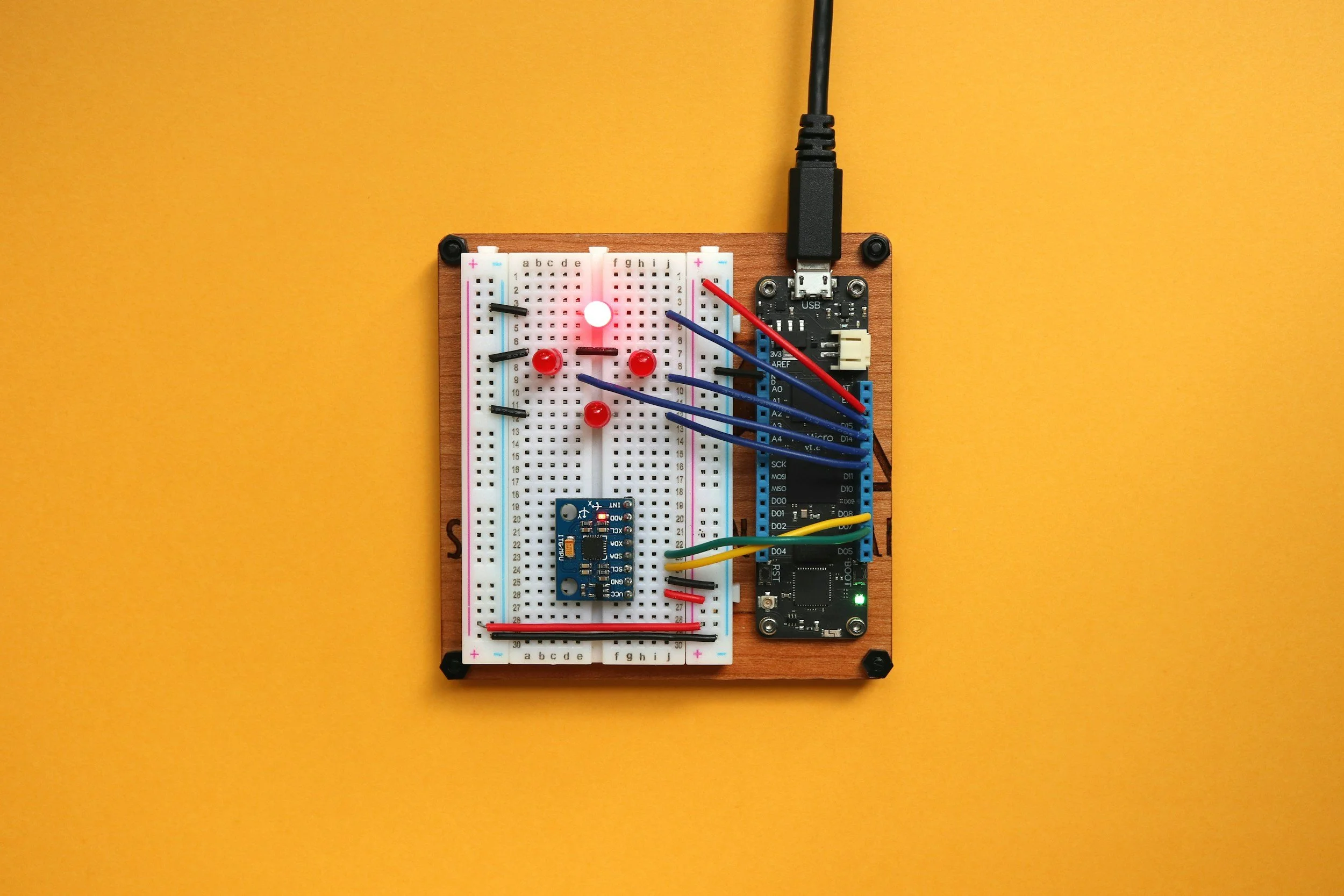
The electrical core of Grid Sentinel's multimodal architecture — and the foundation every other model builds on. Our signal and sensor models detect anomalies, classify faults, and generate predictive diagnostics from the electrical signals that precede grid failure — voltage sags, frequency drift, harmonic distortion, and current irregularities captured in real time at the grid's edge before a single customer loses power. Every model is optimized for grid-specific embedded hardware without cloud connectivity, engineered for real-world conditions where signals are noisy, labeled data is scarce, infrastructure is aging, and millisecond inference is the difference between prevention and cascade.
Multimodal Architecture,
Multimodal Architecture,
Vision Intelligence
-
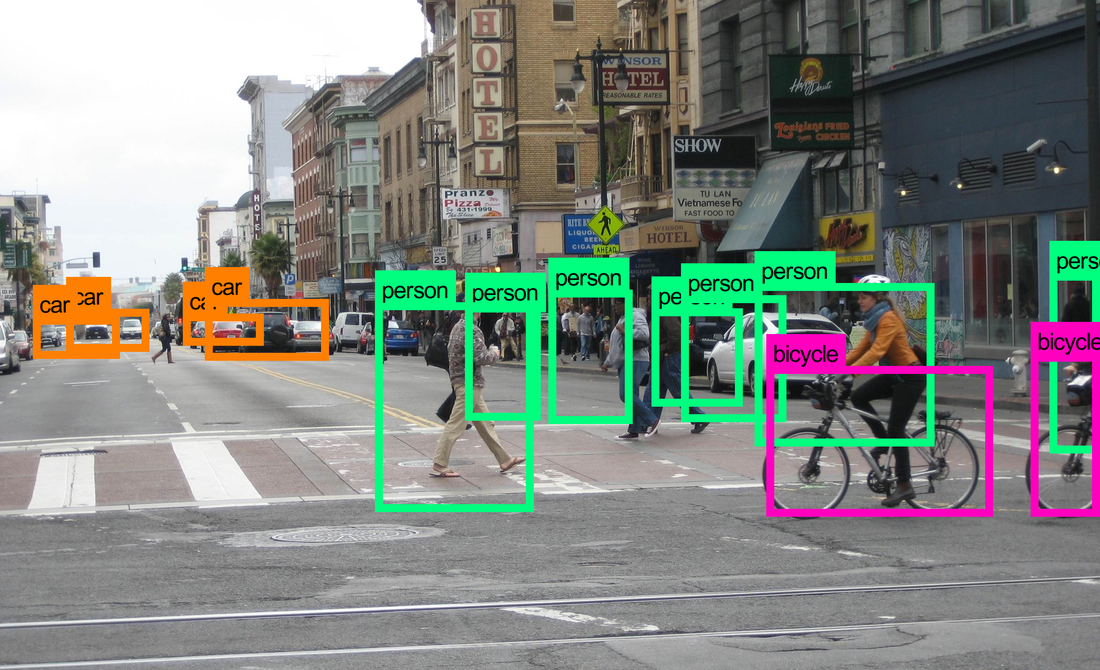
Grid Sentinel's visual intelligence layer — processing satellite imagery, drone feeds, and fixed infrastructure cameras to see what electrical signals alone cannot detect. Our vision models identify vegetation encroachment on transmission lines, assess physical infrastructure condition across substations and distribution networks, detect storm damage before crews reach the field, and map the visual state of every grid asset we monitor. Every model is optimized for constrained edge hardware and degraded field conditions — low light, weather interference, and limited bandwidth — delivering accurate visual inference on-device, without cloud dependency, at the grid's edge where connectivity cannot be assumed.
Audio Intelligence

-
Grid Sentinel's acoustic intelligence layer — detecting the sounds of grid failure before it becomes visible in electrical signals or customer outage counts. Our audio models identify mechanical fault signatures in transformers, switching stations, and distribution equipment — the hums, arcs, and vibrations that precede catastrophic failure and that no electrical sensor alone can capture. Every model is optimized for noisy real-world grid environments where background interference is constant, audio quality is degraded, and on-device inference without cloud dependency is not optional — it is the only architecture that works when and where the grid is most likely to fail.
Language Intelligence

-
Grid Sentinel's communication and output layer — the model that translates the prediction engine's outputs into actionable intelligence for every operator, utility, and government client it serves, in their own language. Every alert, report, and diagnostic delivered by Grid Sentinel is rendered in the local language of the grid it monitors — Arabic for the Middle East, Spanish for Latin America, Portuguese for Brazil, English for the United States. No translation after the fact. Native multilingual intelligence built into the architecture from day one, running entirely on-device without cloud dependency, delivering grid intelligence in the language of every government and operator that depends on it.
Physical Intelligence
-
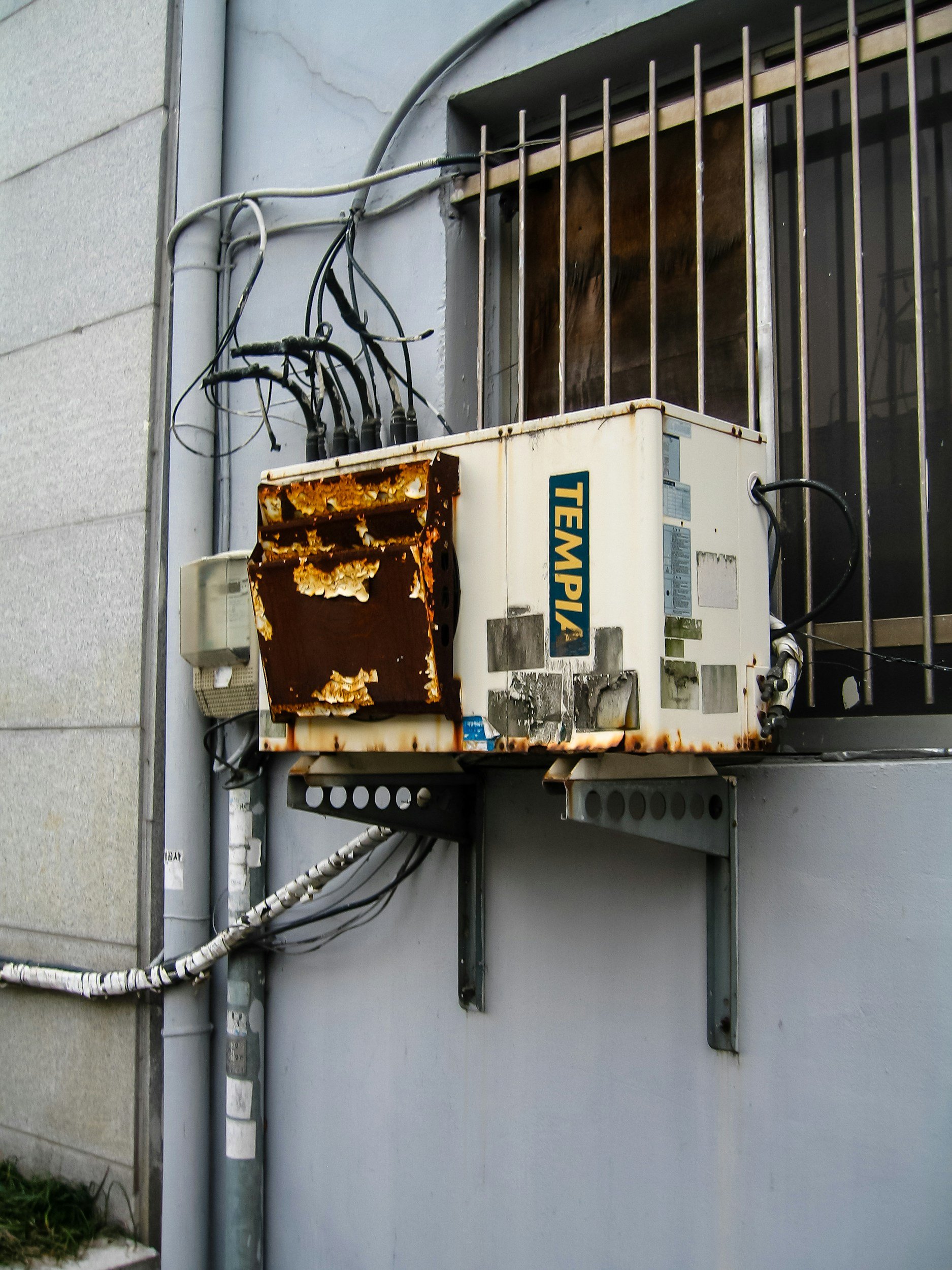
Where Edge Signal & Sensor models detect electrical precursors — voltage, frequency, harmonic distortion — Edge Physical models detect the mechanical and structural conditions of the grid's hardware itself. Temperature readings from overheating transformers. Pressure measurements from stressed cables. Vibration patterns from towers and switching stations approaching structural failure. These are not electrical signals — they are the physical degradation signatures of aging infrastructure, developing over hours and days before they produce the electrical anomalies that Signal & Sensor models see. Together the two model layers see the complete failure picture — the physical condition of the equipment and the electrical behavior it produces — giving Grid Sentinel earlier warning than either layer can deliver alone.
Toolkit * Inference Runtime * Annotation * Evaluation * Optimization * Deployment * Remediation & Hardening *
Toolkit * Inference Runtime * Annotation * Evaluation * Optimization * Deployment * Remediation & Hardening *
Grid Sentinel Toolkit
Grid Sentinel is not just a set of models — it is a complete engineering system. The toolkit covers every stage of the model lifecycle: annotation, training, optimization, evaluation, deployment, and hardening. Every tool is purpose-built for the electrical grid, designed for the constrained hardware and disconnected environments where Grid Sentinel operates.
From the first labeled training dataset to the last hardening pass before field deployment — every tool in the Grid Sentinel toolkit exists to ensure that every model that reaches the grid is accurate, secure, optimized, and hardened for the real-world conditions where failure is not an option.
Inference Intelligence Toolkit
-
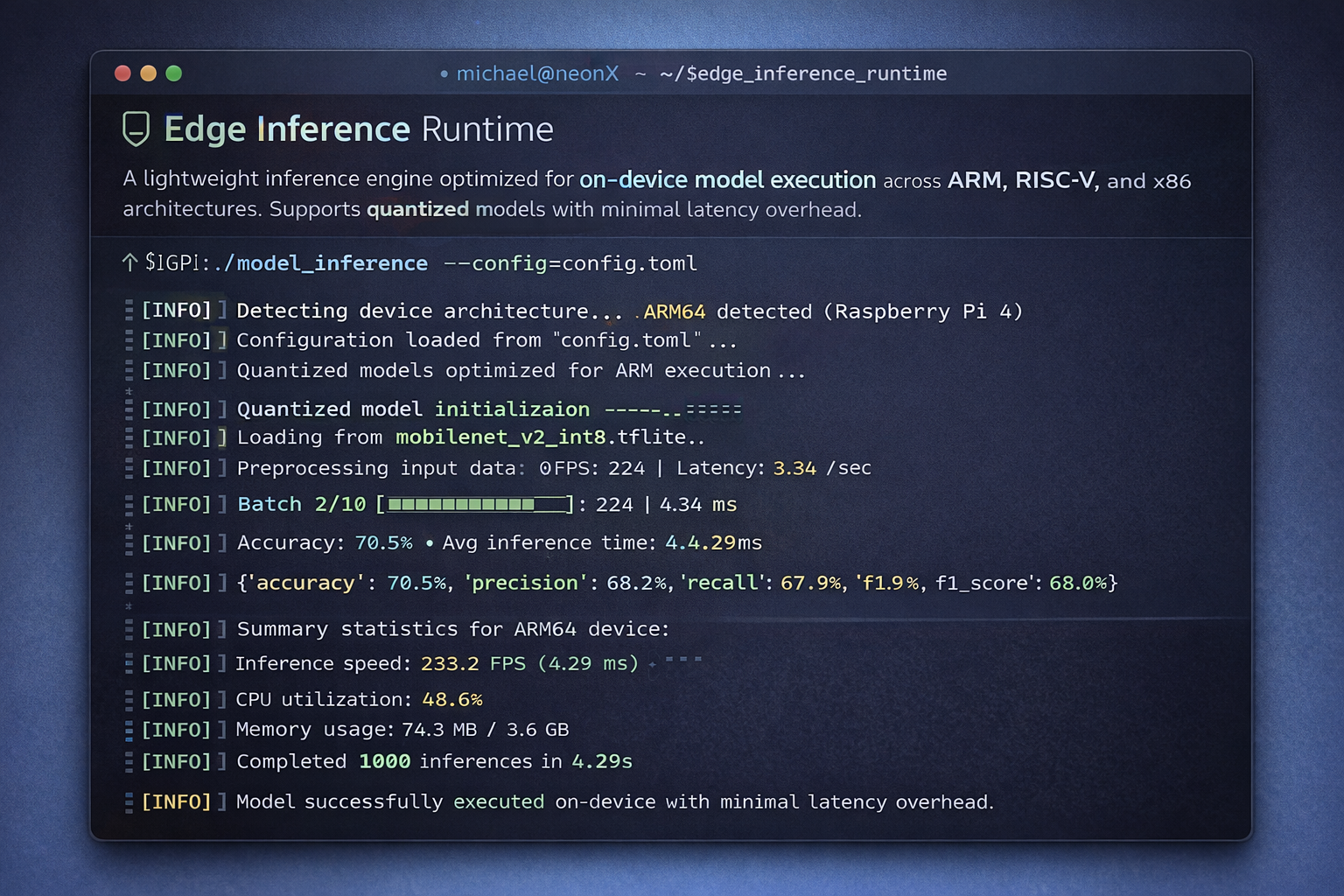
A lightweight inference engine purpose-built for on-device execution of Grid Sentinel's multimodal models across ARM, RISC-V, and x86 architectures — the hardware that lives inside substations, distribution nodes, and consumer edge devices on grids worldwide. Supports quantized models with minimal latency overhead, designed to run without cloud connectivity, within the strict power and compute envelopes of grid-deployed embedded hardware. Configurable for custom grid hardware profiles and built for sustained operation in field conditions where reboots aren't an option, connectivity cannot be assumed, and every milliwatt counts.
Annotation Intelligence Toolkit

-
Data labeling tools purpose-built for Grid Sentinel's five data streams — electrical signal waveforms, satellite imagery, acoustic data, physical sensor readings, and legacy grid documentation. Designed for the reality of grid AI where labeled data is scarce, domain expertise is required, and annotation errors compound directly into model failures. Supports supervised and unsupervised learning pipelines across all grid signal types, with configurable templates for voltage waveforms, spectrograms, acoustic fault signatures, and infrastructure inspection imagery. Includes human-in-the-loop review, inter-annotator agreement tracking, and export to standard training formats — everything needed to build the training foundation that determines Grid Sentinel's prediction accuracy.
Evaluation Intelligence Toolkit

-
Automated testing and benchmarking for Grid Sentinel's multimodal models — performance, robustness, and security evaluation aligned to the NIST AI Risk Management Framework. Every evaluation is tailored to the target grid hardware and operating environment, testing against the real-world conditions the model will actually face in the field — not clean benchmarks that look good on paper. Includes adversarial stress testing for cyberattack scenarios, edge-case generation for degraded grid conditions, latency and throughput profiling on constrained embedded hardware, and drift detection for models in sustained grid deployment. Generates full evaluation reports with pass/fail criteria, remediation recommendations, and audit-ready documentation for federal compliance requirements.
Optimization Intelligence Toolkit

-
Quantization, pruning, and distillation pipelines that compress Grid Sentinel's multimodal models for grid edge hardware while preserving prediction accuracy. Profile, optimize, and validate in a single workflow — taking a trained model from lab-ready to grid-deployable without guesswork. Every optimization is benchmarked against the target grid device's memory, latency, and power envelope before deployment — ensuring deterministic performance under the field conditions that define grid infrastructure worldwide. The goal is simple: the smallest model that still predicts grid failure accurately, running on the most efficient hardware the grid can support.
Deployment Intelligence Toolkit
-
End-to-end deployment pipeline for pushing optimized Grid Sentinel models to grid edge hardware — substations, transmission nodes, distribution equipment, and consumer edge devices. Handles model packaging, device provisioning, over-the-air updates, version management, and rollback across heterogeneous fleets of ARM, RISC-V, and x86 devices deployed across grid infrastructure worldwide. Built for the disconnected and intermittently connected environments where traditional cloud deployment pipelines fail — operating on grids where connectivity is unreliable, field access is difficult, and a failed deployment cannot wait for a technician. Includes device health monitoring, deployment validation, and canary release support for staged rollouts across distributed grid infrastructure.
Hardening Intelligence Toolkit

-
When a Grid Sentinel model fails evaluation, this is where it gets fixed. Diagnostic tools that pinpoint performance gaps, security vulnerabilities, and adversarial weaknesses — then apply targeted remediations that close each gap without compromising what already works. Includes adversarial hardening against cyberattack and signal injection scenarios, robustness patching for degraded grid conditions, and regression testing to ensure every fix holds under the full range of real-world grid operating conditions. Integrates directly with the Evaluation Framework in a closed loop — evaluate, fix, re-test — until every Grid Sentinel model deployed to the field is hardened for the electrical grid's physical reality and its national security threat environment.